- Wednesday, 29 July 2026



Listen To Youth Call For Reforms
As Sonam Wangchuk ends his fast and the Cockroach Janata Party (CJP) creates history by compelling Education Minister Dharmendra Pradhan of the Prime Minister Barendra Modi-led

Alternative Finance Aims To Boost Growth
Nepal’s parliament has recently enacted the landmark legislation - Alternative Development Finance Mobilisation Act, 2083. The new legislation establishes a separate alternative finan
Write With Purpose
Writing might be the least costly of hobbies. Fine arts require a solid investment in art materials and supplies. Crocheting too requires spending hard-earned money on yarn. Similarly, for

Child-friendly Cities For Everyone
“If a city is designed for children, it will work for women, the elderly, and everyone else.” This
Prosperity Sans Presence Is Meaningless
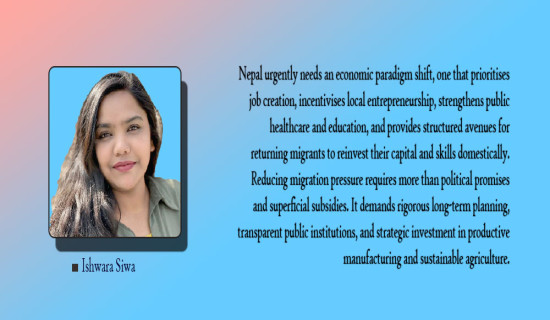
Every evening, Kathmandu’s streets are filled with the quiet hum of luxury electric vehicles. Those are glittering symbols of a modern, changing Nepal. Yet, the capital’s comforts are large

Start Investing Early
For many young Nepalis, money usually means earning, spending and saving. A student may save pocket money, a young employee may keep part of their salary in a bank account, and

Denial Doesn’t Confirm Truth
China launched an intercontinental ballistic missile this month, which predictably angered the major players in the Western hemisphere. The missile had the capability of reaching Japan,
New Ray Of Hope For Usury Victims
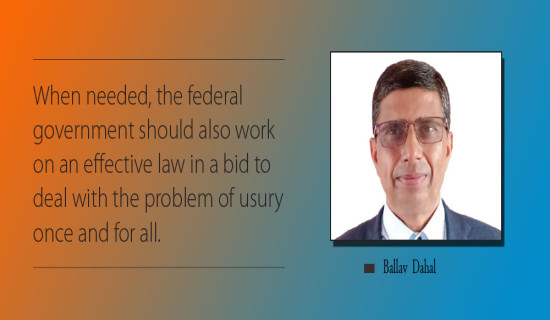
Illegal moneylending has been a severe problem facing many vulnerable people even today in Nepal. The informal lending practice has been widespread in Tarai districts, forcing vul
Fear Of Judgement
Have you ever felt scared to do something because you fear how others may perceive you? This phenomenon is very common and is seen across people of all age ranges. We put societal
Even In Defeat, Messi Draws Acclaim
The frenzy surrounding the football World Cup has died down with the final match on July 19. It set one record after another. With its brilliant display, Spain lifted the WC trophy, breakin

How To Prevent Suicide Contagion
Every year, around 720,000 deaths are attributed to suicide worldwide, with one person committing suicide every 40 seconds. It affects not only family members but also society at larg

Own Your Actions
How insane and stupid it is to blame the government for everything! How bizarre it is to blame the government for an individual’s impulsiveness, foolishness, and decisions! No nation can
The People At Bottom Need Visibility
The aim of any rational, humane progress is to bring those people out of sight into visible light in policy attention and positive intervention and enable them to face the uncertainty of time, not subjecting them to powerlessness, out of a
