- Wednesday, 29 July 2026

Promoting equality and respect for girls
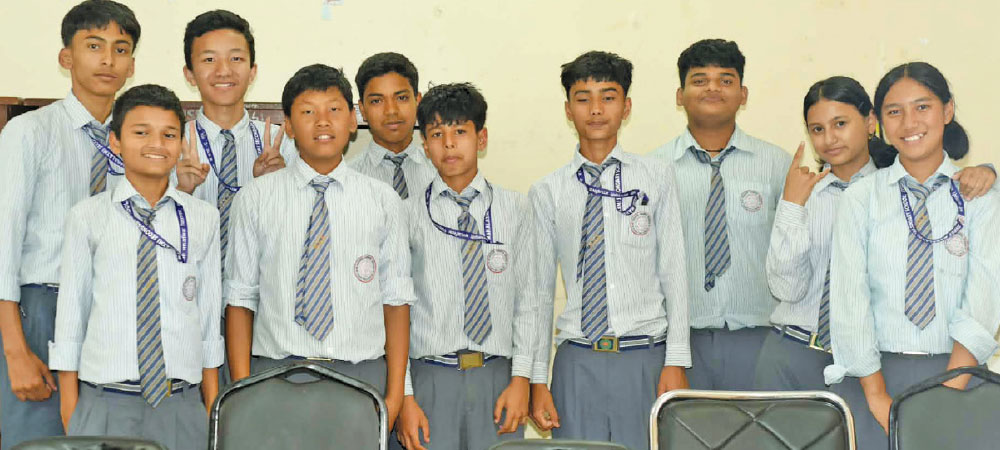

Kathmandu, July 4: Grade 9 student Loveraj Pandey of Shree Gamvir Samudra Setu Secondary School once believed that household chores were mainly a woman’s responsibility. However, after participating in the We Men Club, his perspective has changed.
He now understands that household responsibilities should be shared equally among all family members, reflecting a significant shift in his understanding of gender roles at home. He also learned that expressing emotions does not make boys weak. As a result, he now feels more comfortable talking to his teachers and parents whenever he faces problems.
Grade 8 student Kushal Pradhan said the club changed many of his beliefs. He learned that girls deserve the same opportunities as boys and should never be limited by gender.
His classmate Nishal Rai said learning about child marriage and gender equality inspired him to share these lessons with his family and friends and spread awareness beyond the school. They are representative students of public schools, where a quiet but powerful transformation among boys is taking place.
Students who used to laugh at menstruation now talk about it with respect. Others who once hid their emotions are learning that asking for help is a sign of strength rather than weakness. These everyday changes are being driven by the We Men Club, a school-based initiative that encourages adolescent boys to question harmful gender stereotypes, build empathy, and become respectful allies for girls and women.
The campaign is proving that achieving gender equality is not only about empowering girls; it also requires raising boys who believe in fairness, respect, and shared responsibility.
It is being implemented at a total of seven schools of Kathmandu and Lalitpur, namely Shree Gamvir Samudra Setu Secondary School, and Shree Mahalaxmi Secondary School in Lubhu, Shree Tri Padma Vidhyashram Secondary School, Shree Adarsha Saula Yubak Secondary School, Shree Mahalaxmi Secondary School, Shree Bal Bikash Secondary School and others.
The We Men Club provides 25 interactive sessions in seven schools on gender equality, respectful relationships, consent, menstruation, child marriage, emotional well-being, cyber safety, leadership and social responsibility.
Instead of traditional lectures, students participate in discussions, games, role-plays, storytelling and group activities that encourage them to connect these topics with their own lives.
Nira Shrestha, Headmaster of Shree Gamvir Samudra Setu Secondary School, informed that the club has produced noticeable changes since it was introduced about one and a half years ago.
Initially designed to support students who needed guidance in improving their behaviour and discipline, the programme has evolved into an initiative that benefits the wider school community.
“Students are more disciplined, participate actively in class and sports and treat teachers and classmates with greater respect," Shrestha said.
Shrestha further said, “Parents also tell us that many boys now communicate more openly at home and willingly share household responsibilities.”
According to We Men Club facilitator Prajay Shrestha, creating a safe space where boys can openly discuss sensitive issues is one of the programme's greatest strengths.
"When boys meet in separate groups, they feel more comfortable asking honest questions, sharing personal experiences, and expressing emotions they would normally keep to themselves," he said. "Gender equality is not only about empowering women. It is equally about helping boys become respectful, responsible, and emotionally healthy individuals who reject violence and believe in equal opportunities."
The practical approach helps students apply lessons beyond the classroom. Rather than memorising concepts, they reflect on real-life situations involving their families, friendships, and communities, making learning meaningful and lasting.
Pramila Shrestha, Headmaster of Shree Mahalaxmi Secondary School, said boys who participate in the We Men Club are noticeably more respectful towards girls and better understand topics that were once considered taboo.
"Only a few years ago, boys avoided talking about menstruation. Today, many understand it is a natural biological process rather than something embarrassing. Some even buy sanitary pads for family members without hesitation. That simple act reflects a much bigger change in attitude, she said.
Grade 8 student Rehan Lama said, "I used to think boys should feel embarrassed buying sanitary pads. Now, if my mother needs them, I buy them without hesitation because there's nothing shameful about helping your family." Teachers said the benefits extend beyond gender awareness. Students communicate more openly, show greater confidence, take responsibility for their actions, and are more willing to stand against bullying and discrimination.
Girls also report feeling more respected and included in classroom discussions, saying boys who attend the club listen more carefully and treat them as equals.
The experience of these schools shows that meaningful change begins with conversation. When boys are encouraged to question harmful stereotypes, express their emotions, and practice respect in their everyday lives, they become active partners in building a more equal society. By investing in boys during adolescence, the We Men Club is helping shape a generation that understands that kindness is strength, respect is responsibility and equality benefits everyone.