- Wednesday, 29 July 2026

Billions spent on timber, aluminium imports as domestic timber remains underused
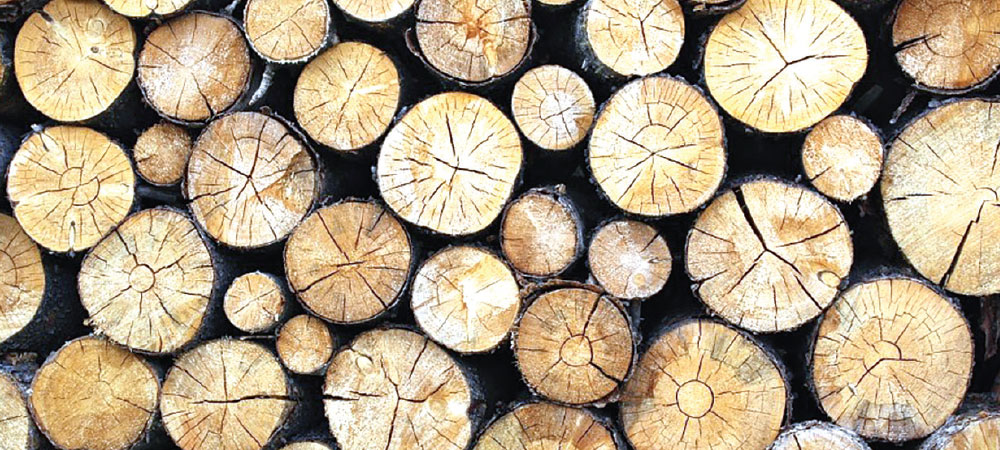

By Raman Paudel/Indira Aryal, Kathmandu, July 26: A farmer named Nabaraj Giri in Benighat Rorang Rural Municipality, Dhading district, spent more than one million rupees to buy timber-made materials such as a sofa, sleeping bed, and table for his new house this year. He has hundreds of trees in a forest in his private land that cost up to five million rupees.
The situation of Nabaraj represents an example of a larger issue affecting the entire country of Nepal. Each year, billions of rupees are sent abroad to import timber and aluminum, while the country seems to discourage the development of its own timber industry.
While traveling along the East-West Highway, you will see large timber piles, or logs that have been stacked for years, in roadside forests. It is estimated that millions of cubic feet of timber piles have been cut and wasted this way.
However, every year, hundreds of millions of Nepali rupees are being dispatched abroad to import timber and aluminum. Many forest and environment activists argue that this condition has disrupted Nepal's supply and demand balance.
Many reports confirm that the number and density of forests have increased in the last few decades. However, activists, including experts, argue that the government has been unable to utilize the timber that is wasted across the country, so a large amount of money has been going abroad. Along with this, Nepal can earn a large amount of income by exporting timber, experts suggest. A recent study conducted by a team led by Dr. Mani Ram Banjade found that Nepal imports timber and timber products worth around Rs. 6 to 8 billion each year, despite having significant forest resources.
The country faces an annual timber demand of 50 to 60 million cubic feet, while domestic production is limited to only 20 to 30 million cubic feet, creating a substantial supply gap. As a result, Nepal relies heavily on imported timber and wood products to meet the market demand.
The main imported products include plywood, raw timber, and various wood-based furniture materials. India is Nepal's largest source of timber imports, accounting for about 54 per cent of the total, followed by Indonesia with 17 per cent and China with 13 per cent. Smaller volumes are imported from countries such as Myanmar and Malaysia. Experts say increasing sustainable domestic timber production could help reduce import dependence, save foreign currency, and create employment opportunities within the country.
Bharat Pokharel, a forest expert, argues that there is a misconception about cutting trees. Even in understanding the forest, there is no clarity, he claimed.
“The overall size and density of forests have increased in the last 30 years. Timber is similar to crops; cut and replant it. If timber is sold abroad, it goes into surplus. Nepal's timber could earn a very good profit if it could be sold only in Tibet and Bihar. But disputes between the three tiers of government have complicated the forest issue,” Pokharel said.
He argued that since the country adopted federalism, the forest policies have become regressive instead of progressing towards a more liberal approach. There is still dispute over who will be responsible for the ownership and management of forests after the establishment of federalism.
“Federal policies have placed forests on the common-concern list. Even placing them on the single-concern list created a controversy. While explaining various issues including watersheds, environmental protection, and reservoirs, contradictions arose.
The very act of placing forests on the common-concern list created controversy. Some forests were placed on the single-concern list, but the topics used there became contradictory,” Pokharel said.
Some types of forests have been placed on the single-concern list, but the responsibility for the watershed and environment there lies with the federal government. In particular, forests should be owned and managed under the responsibility of the community.
In addition, forests were forcibly placed under the province, but the province could not make laws and allocate budgets. Finally, the federal government started operating them.
Despite forests covering more than 46 per cent of Nepal's land area, the country is harvesting less than 17 per cent of the sustainable timber available from national forests, resulting in an estimated annual economic loss of NRs 19.95 billion in revenue and NRs 4.58 billion in employment, according to a new policy note by ForestAction Nepal.
The report argues that Nepal's timber sector is constrained not by ecological or technical limitations but by policy ambiguity, bureaucratic delays, institutional risk aversion, and unclear governance responsibilities. It warns that while domestic forests remain underutilized, Nepal continues to import timber and timber substitutes worth billions of rupees each year.
Drawing on research conducted during 2024–25, ForestAction Nepal found that private forests account for more than 82 per cent of the country's timber production, while national forests—including community and government-managed forests—contribute less than 18 per cent.
The report calls for recognizing community forestry as a multi-functional social enterprise, simplifying timber harvesting and transport procedures through digital systems and streamlined regulations, and adopting a co-production model involving government agencies, local governments, communities, and the private sector.
Researchers argue that implementing these reforms could increase sustainable timber production, generate rural employment, boost government revenue, and strengthen forest conservation and climate resilience.
An effort in using Nepali timber in local market
Despite various challenges, government officials stated that some efforts have been made. At the local and provincial level, an effort has been made to make local timber an income source.
Bishnu Prasad Acharya, the Divisional Forest Officer at the Rapti Divisional Office, said that many people believe Nepal faces a timber shortage, leading to a reliance on imports. This perception has resulted in a growing trend of using metal and other materials instead of timber. However, the reality is that Nepal has an abundant supply of timber. The major question is why we have not effectively utilized our own local timber resources on a national scale.
“Earlier, under scientific forest management, timber and firewood were produced from accessible forests in the Tarai, Inner Madhes, community forests, national forests and block forests,” Acharya said.
However, at one point the programme was suspended, and the operational procedures in place at that time were scrapped by the government.
After Nepal adopted federalism, the former Department of Forests was restructured into provincial governments and 84 Division Forest Offices. Sustainable Forest Management (SFM) was then introduced, particularly in the Tarai, Inner Madhes and some hill districts with productive forests such as sal forests.
Bagmati Province was the first province to formulate Sustainable Forest Management guidelines. Forestry is now implemented by provincial governments, although the federal Ministry of Agriculture, Forests and Environment provides the overarching legal framework.
“Based on forestry science, silvicultural systems and sustainable forest management principles, working plans have been approved for community forests, national forests and block forests. Timber and firewood are now produced according to these approved plans,” he said.
Acharya claimed that Nepal is no longer importing timber in large quantities. The previous Bagmati provincial government also decided that government construction projects in the province should use domestically produced timber. The current government is also promoting domestic products, including timber.
“At present, the timber we produce is being sold within the country, and imports are not significant,” Acharya said.
Timber is supplied by community forests as well as national forests. There are also protected forests and collaborative forests. In collaborative forests, such as those in Kapilvastu, Kailali, Rupandehi and Bara, a portion of the revenue goes to the user groups while the rest goes to the Division Forest Office.
The Division Forest Office then auctions the timber and collects government revenue before it reaches urban markets.
According to him, earlier, there was a perception that timber was rotting inside forests because it could not be transported out. That is no longer the case.
“If you still see old timber lying along highways, most of it is timber harvested years ago. Under the law, it has to be revalued before sale. Such old timber has little market demand because buyers prefer fresh timber. Fresh timber gives a better recovery rate when sawn, while old or decayed timber produces less usable wood and has much lower value. Much of the old timber you see beside roads predates the current Sustainable Forest Management system,” he added.
According to Acharya, the issue is no longer that timber is being left to rot inside community forests. In the past, some timber came from infrastructure projects such as road expansion and transmission line construction.
However, by the time it was handed over for auction, lengthy administrative delays meant buyers had lost interest or the timber had deteriorated.
Officials at the Rapti Division Forest Office say there is now virtually no stock of old timber remaining in community forests under their jurisdiction.
They explain that while the province has enacted its own Forest Act and Regulations, these are aligned with the federal Forest Act. Federal law governs issues such as forest offences, penalties, and illegal timber extraction, while provincial legislation mainly covers areas such as forest-based tourism and development. In cases of legal conflict, federal law prevails.
Meghnath Paudel, Chairman of Milijuli Buffer Zone Community Forest, said that the primary source of income for the Community Forest is the sale of timber (wood) harvested from the forest. This revenue is the leading contributor to the forest's financial operations, which typically maintain an annual balance sheet of around Rs. 5 million.
Although various laws cover the process of timber sales and industry operations, contradictory laws and practices between the three tiers of government have complicated the entire management process.
Thakur Bhandari, the president of FECOFON, said, “This problem has been created because the federal government is not ready to hand over its ownership of the forest to the community."
In addition, the provincial governments have also not been able to understand the issue of forest management. "Everyone should be clear in their thoughts that the forest was previously protected by the community, and now the community also manages it.”