- Wednesday, 29 July 2026

The Reality Of Theatrical Craft
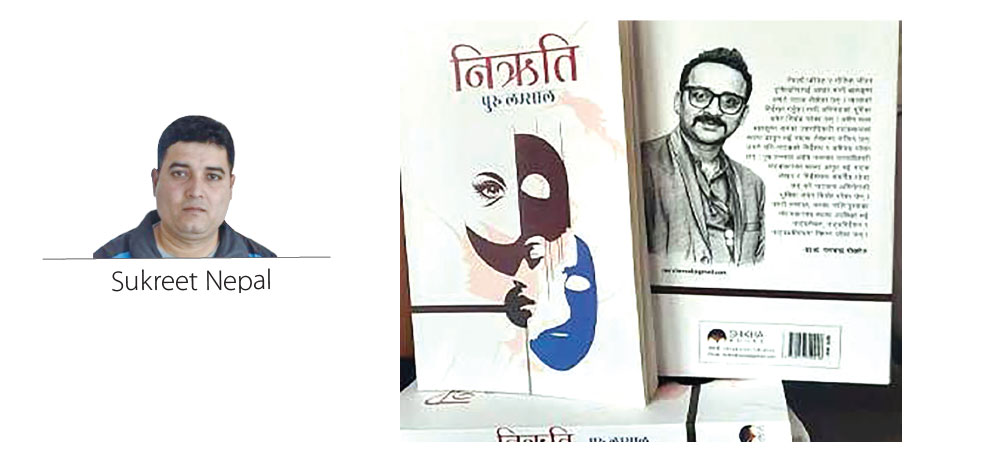

For a long time, Puru Lamsal has been actively involved in Nepali theatre, as a skilled theatre artist, director, and actor. His plays have strong stage potential. They are not only meant to be read but are equally suitable for performance. Being both a director and an artist himself, he writes plays with attention to character movement, visual composition, and lighting. The dialogues in his plays are short, sharp, and suitable for the stage.
His creations present a vivid picture of contemporary Nepali society. Issues such as family separation caused by foreign employment, the emptiness of villages, the loneliness of the elderly, and the fading human sensitivity in modern generations are strongly raised in his works. His writing also tries to present female characters in a powerful way. In plays like “Nirriti,” he attacks discrimination against daughters in the name of lineage and inheritance and questions patriarchal thinking.
His writing style is not complex. His special quality is using simple language that common people can understand and creating an environment that feels like rural life. He is skilled at turning small and unnoticed social incidents into dramatic forms. His participation and direction in various theatre festivals have helped energize Nepali theatre. Through collections like “Nirriti,” he has tried to enrich Nepali dramatic literature.
The first play, “Parkhineharu,” talks about social displacement. It highlights one of the biggest tragedies of present Nepali society—foreign employment and the social emptiness it creates. It is not just a play but a picture of abandoned villages. It presents the loneliness and helplessness of elderly people left behind after youth migrate abroad.
Especially, scenes where there are no young people even to carry a dead body show the helplessness of the state and the horror of displacement. The play raises questions like: “Can a nation run only on remittance? Is development possible at the cost of elderly tears and unattended corpses?” In this way, it sharply criticizes the human emptiness of rural society.
The second play, “Aamalaya,” is about the loss of human sensitivity. It shows how modernity and materialism weaken human emotion and morality. A mother who sacrifices her whole life for her children is later neglected by her own son and daughter-in-law in old age. This is the central conflict.
It reflects the breakdown of the traditional joint family and the growing selfishness in society. The ingratitude of the son and the mother being forced to take shelter in an old-age home raise questions about our culture, education, and modernity. The play presents the depth of motherly love and the crisis in human relationships.
The third play, “Kalpantar,” tells the internal struggle of an artist. It shows how society gives respect and applause on stage but ignores the difficult personal life of the artist behind the curtain. It presents the conflict between artistic creation and economic struggle.
The fourth play, “Colors of Silence,” is philosophical and artistic. It tries to see life not only in physical form but also through art, music, and poetry. It expresses deep human emotions that cannot be spoken through words. Silence itself is used as a language. It presents the complexity of relationships and the endless search of life in a philosophical way.
The title play “Nirriti” is a strong work about patriarchy and identity. It strongly opposes the belief that only sons can carry lineage. It raises a voice against gender discrimination, showing that daughters are equally capable. It criticizes traditions and blind beliefs that suppress women’s identity and calls for awareness and change.
All the plays in the collection present different social problems through theatrical craft. His works focus more on sensitivity than imagination and more on reality than fantasy, which makes them relatable to readers and audiences.
These plays are not just imagination but living documents of contemporary Nepali society. Especially, they reflect political transition, foreign employment, and resulting social and cultural breakdowns. The emotional loss in villages, lonely elderly people, and consumer culture brought by remittance are shown in a touching way.
His long involvement in theatre, direction, and acting is clearly seen in these plays. They are not only for reading but are structured for stage performance. The balanced use of scenes, characters, lighting, and sound makes them technically suitable for staging.
Most plays focus heavily on social problems. While they show reality clearly, some scenes become very emotional and serious, which may create a sense of sadness. Literature should not only show problems but also give hope and direction. A more balanced presentation of solutions and positive change could make the work even stronger.
This collection will remain an important contribution to Nepali dramatic literature. These plays, which can deeply analyse society and push readers toward self-reflection, will continue to influence both theatre and literature for a long time.
In conclusion, “Nirriti” is a powerful document of the present time. It shows the face of the society we live in and encourages us to become more humane and aware.
(The author is a journalist at Gorkhapatra.)