- Wednesday, 29 July 2026

Devghat Dham's plastic ban remains unimplemented
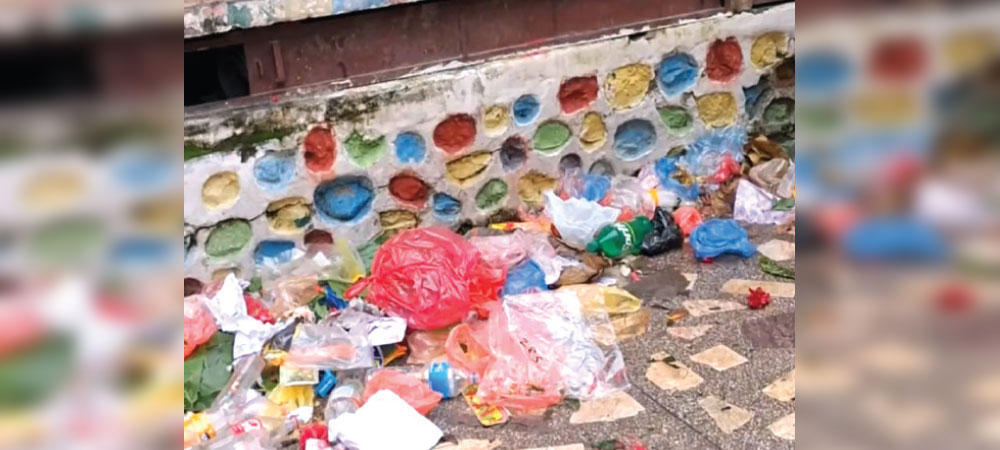

By Amar Raj Naharki,Tanahun, July 24: Plastic waste continues to pile up across the famous religious site of Devghat Dham despite its declaration as a plastic-free zone, leaving the sacred area polluted and foul-smelling.
Although the site was declared a plastic-free zone on December 26, 2025, the ban has not been effectively enforced, resulting in a growing problem of plastic waste.
The declaration was made jointly by local governments, the Devghat Area Development Committee and other stakeholders. However, plastic bottles, bags, food wrappers and disposable plates can still be seen scattered around the temple premises, the Triveni confluence and the banks of the Kali Gandaki and Trishuli rivers.
Locals said the problem becomes worse during festivals and fairs, when large numbers of pilgrims leave litter behind. Delays in collecting and managing the waste have affected both the religious importance and the natural beauty of Devghat.
Shiva Raj Poudel, former chairman of the Devghat Area Development Committee, said strict measures and awareness campaigns were launched when the plastic ban was first introduced, but the lack of regular monitoring has weakened its implementation.
He said pilgrims continue to throw waste along the riverbanks, spoiling the appearance of the holy site.
Environmentalists warned that plastic waste, which takes a long time to decompose, is often washed into the rivers during the monsoon, increasing water pollution and harming aquatic life and river ecosystems.
They also said that plastic pollution damages the area's appeal as a religious and tourist destination while posing long-term risks to public health and the environment.
The Devghat Area Development Committee said it plans to step up monitoring of the plastic ban, take action against those using plastic or littering, and launch special clean-up campaigns to improve sanitation in the religious area.
When Devghat Dham was declared a plastic-free zone, authorities announced a gradual ban on single-use plastic bags, plastic products thinner than 40 microns and disposable plastic bottles, cups and plates. They also pledged to promote biodegradable and environmentally friendly alternatives.
The campaign was launched in coordination with the Devghat Area Development Committee, Sahamati, an organisation based in Gaindakot, Nawalpur, and several other organisations to make the religious site, shared by Tanahun, Chitwan and Nawalpur districts, free of plastic.
The initiative was introduced after pilgrims increasingly began leaving flowers, offerings and plastic packaging on the riverbanks, with the aim of keeping the rivers and the sacred site clean.