- Wednesday, 29 July 2026

Address Parking Problem


Today, cities and urban centres are the drivers of economic growth and a critical source of job opportunities – both blue and white collars. This explains why so many people flock to city centres from rural areas to improve their economic lot, adding to the opportunities. And to seize on these opportunities, people have to commute to work daily. Once people gain a strong financial footing, they covet to own a car of their own. In places where public transportation is awful, this becomes more of a necessity than a choice. And a handful of global cities epitomise this situation the way the Kathmandu Valley does, where humble two-wheelers vastly outnumber their luxury counterparts: cars, in sharp contrast with many first-world cities, where owning one or more cars and driving them to work is ubiquitous.
When supported by accommodating transport infrastructure, the explosive growth of vehicles in number may not invite many problems. But when the former fails to keep pace with the letter, problems begin to multiply. People start getting stuck in notorious traffic jams. Every year, globally, billions of hours meant to be spent on work are wasted on traffic snarls, lowering employees' productivity and therefore the paychecks worth hundreds of billions of US dollars. And here's another major problem compounding it: parking space. What happens when the number of vehicles greatly outstrips the available number of convenient parking lots? This is not just the question transport managers in the valley are grappling with; motorists are increasingly living this dire reality brought about by this mismatch.
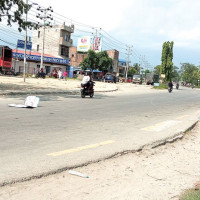
A story carried by this daily the other day highlights Kathmandu's worsening parking shortage – a problem that has gained prominence after the self-immolation of Ganesh Nepali, triggered by the alleged dispute with the Kathmandu Metropolitan City (KMC) security personnel over the brief stoppage of his bike to drop off passengers. The capital city has recently become aggressive in restricting roadside parking, and urban planners, transport experts and motorists allege that this is happening without creating viable alternatives for short-term stopping, passenger pick-up and drop-off, or long-term parking. Consequently, for countless riders and motorists, finding a proper parking space is a far bigger headache than navigating to get to the destination. Making matters worse is the lack of a service lane, which allows drivers to stop briefly without entering paid parking. As things stand, this problem is likely to worsen, given that there has been no let-up in the growth of vehicles.
Experts attribute this crisis to the haphazard urbanisation that the valley has undergone for decades. Imposing hefty and harsh traffic penalties for violators, which the authorities are considering, may not be the viable solution, as it raises the question of how low-income people will be able to pay the fine. Building multi-storey parking facilities respecting the seismic guidelines might, to some extent, reduce the problem. However, as argued by urban planners, making public transport reliable and convenient to travel goes a long way to obviate the need for private cars. The fewer the cars, the less the need for parking. Besides, developing a digital application that will allow commuters to track bus routes and expected arrival times, as planned by the KMC, will help in reducing uncertainty and waiting times, eliminating the hassles related to parking. That said, relying solely on technology isn't the answer. Long-term proper planning that adequately takes into account what might happen decades later is imperative.