- Wednesday, 29 July 2026

Salvaging Universities


The university is considered the centre of knowledge and innovation. Students enroll in universities to obtain the specific, high-level knowledge that enables them to pursue successful careers. The varsity education involves studies, research and experiment. The students not only acquire knowledge and ideas but also push the frontiers of knowledge, contributing to the further development of society. The universities also offer an academic atmosphere filled with national and cosmopolitan feelings. University studies go beyond pedagogic learning; they broaden the outlook, helping to understand the country's underlying problems and find sustainable solutions. The university graduates become role models in various sectors and their contribution takes the societal evolution to another level.
The university shapes the academic as well as intellectual capacity of the students. As they complete their studies at the university, they set out for a brighter future. However, it requires a fundamental condition – the academic atmosphere must not be polluted by any exterior element. As the academic excellence deteriorates, the university no longer serves as the benchmark of higher education. It fails to produce competent human resources needed to fuel economic progress. Smart students opt for foreign universities, spurring the brain drain. Nepal's higher education suffers from politicisation and disregard for meritocracy. The state-owned universities have been victimised by the extreme partisan meddling in the appointment of key posts, with students involved in politics more than in academic activities. This has spoiled the entire education system in the country.
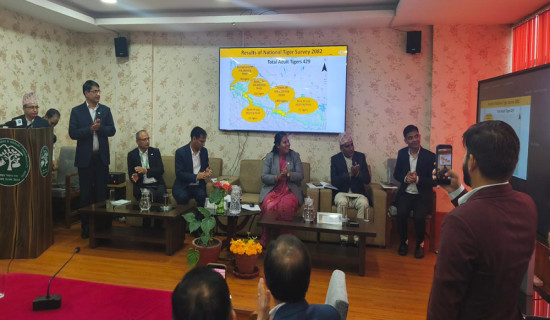
The new government, led by Prime Minister Balendra Shah, has been emphasising that universities must be free from politics. The student unions, which have been working as the instruments of the political parties, have been unable to play their constructive role in enhancing the academic status of universities, particularly the Tribhuvan University. This is a reason why his government brought an ordinance to ban the student union. Student councils have been mulled to replace it. Similarly, the government has appointed vice-chancellors in various universities on a merit basis, with the hope that they will reinvigorate the university, keeping the vested political interest at bay. The other day, newly appointed Vice-Chancellors (VCs) of various universities said that they would work to rid universities of partisan politics and promote good governance. They made their commitment during a discussion on the current state, challenges and reform agenda of higher education in the presence of Prime Minister Shah at the latter's office in Singha Durbar.
The new VCs said the faculty members, administrative staff and students will refrain from party politics while the universities will fully focus on constructive, disciplined and academic pursuits. It is commendable that they have committed to introducing wide-ranging reforms in university administration, finance and academic affairs. Meanwhile, Prime Minister Shah has instructed them to reduce long-standing audit irregularities, strengthen financial discipline, recover and properly manage government funds and university land that have been unlawfully occupied or misused and take firm action to safeguard encroached university property, according to a news report of this daily. The PM also asked them to decentralise their graduation ceremonies by conducting them across all seven provinces. The government's initiative to restore academic excellence and glory needs to be backed by fresh policy and adequate budgetary allocations. The new vice-chancellors have their own onus to translate their pledge into action.