- Wednesday, 29 July 2026

What RSP Needs To Be Strong Party

Four years since its launch, the Rastriya Swatantra Party (RSP) has gradually emerged as a modern political party. While the party held its first convention recently, its government has completed 100 days in office. Good governance, policy reforms, corruption control and administrative restructuring have been the government’s rallying cry. The government has claimed it has made significant improvements in the governance sector, with service delivery becoming faster, more effective and more efficient. The administration has also run the gauntlet for its dealings with some issues, including the landless squatters’ problem. On one hand, the RSP has onerous responsibility of fulfilling the expectations of the electorate. On the other hand, it has to expand the organisation that enables it to gain broader acceptance at the grassroots and muster public support to implement the government’s drastic programmes and policies.
Unlike the old parties, the RSP lacks strong base at the local, district and provincial levels. Riding on the back of soaring popularity, it is in a better position to grow organisational strength. The first convention picked Rabi Lamichhane as president unopposed, while electing 99 Central Committee (CC) members and seven office-bearers. The party president will nominate an additional 51 CC members, 12 office-bearers and a 31-member secretariat to give a complete shape to it. The central body is just one structure of the party that requires other fundamentals to be vibrant, inclusive and representative of the diverse Nepali society.
Integrative capacity
Clear ideology, organisational networks, integrated capacity, autonomy, consistency, representativeness and adaptability are some integral elements of political organisations. The RSP has embraced social democracy as its guiding principle. It is based on a competitive liberal economy, rule of law, a people-accountable government, a welfare state, and an inclusive and equitable society. These characteristics reflect the constitution that has stressed a socialist-oriented economy. The RSP has ruled out the polarisation between the right and the left as seen in the old political forces. However, critics insist that its budget unveiled for the upcoming fiscal year 2026/27 does not reflect the spirit of social democracy that promotes a welfare state. The party vice-chair and Finance Minister Dr. Swarnim Wagle has emphasised expanding the ‘middle class’, arguing that it is the bedrock of democracy. However, farmers, workers and other marginalised class have failed to receive equal attention in the budget.
The RSP is relatively new in building the organisational networks compared with the old political forces whose legacy go back to more than seven and half a decades. The parties like Nepali Congress, CPN-UML and other communist groups were born in the course of fighting against the autocratic regimes. Their first- and second-generation leaders made big sacrifices for the cause of democracy. Quite the contrary, the RSP leaders rose to the national scene while fighting against misrule, bad governance and malfeasance of the governments led by the old political parties. They are a digitally savvy generation that exploited internet democracy to raise their voice against corruption, unemployment and brain drain.
In order to evolve as a truly inclusive party, the RSP must enhance its integrative capacity to accommodate diverse interest groups. But, in doing so, it must not lose its autonomy, meaning that it should not be swayed by any particular group. The political education, training and mobilisation of its functionaries are equally important to generate their critical consciousness and intellectual competence. The bottom-up approach is effective in building the committees from the wards to the centre. When the participation of local committees is promoted, their constructive inputs are channeled into the central policy formulation.
Another vital element of political organisation is the inner-party democracy that overcomes dogmatism, bureaucratisation and autocratic impulses of the top leadership. It makes the party receptive to new ideas and innovation. The main reason behind the downfall of old parties like NC and UML is their anathema to internal democracy and blockade of youths into the leadership rung. The RSP and its government’s leadership also need to step into communicative action by reaching out to the opposition parties, civil society, business community and media. This is necessary to win the trust of a broader section of society and maintain greater credibility.
Effective representation
With its first convention, the RSP has moved to transform itself into a strong democratic force. However, the party has followed the footsteps of the old parties when it comes to giving special rights to the party president. This is where the detractors are pointing the finger at the party leadership. According to sub-clause (a) 3 of clause 11 of the party statute, the president gives necessary policy-level direction to the Parliamentary Party to make effective representation as well as implement the party’s official policy, principles, decisions and outlooks in case the president is not the PP leader. Sub-clause 1 (e) of clause 68 states that the PP leader will be relieved of his post if the former does not obey the president’s policy-level instruction in accordance with sub-clause (a) 3 of clause 11. In a parliamentary democracy, lawmakers elect the PP leader, who is appointed the prime minister if his/her party has a majority in the parliament. The prime minister has to resign if he/she loses majority in the PP.
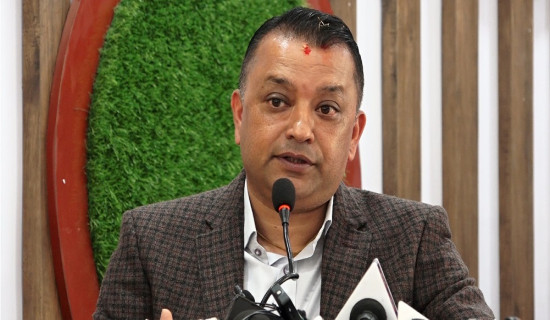
According to a media report, an RSP office-bearer argues that the statute has allowed the president to check the prime minister for power balance. He has insisted that the party runs the government, so this provision has been kept as part of the control mechanism. As per the statute, Prime Minister Balendra Shah is the senior leader of the party and president Lamichhane has yet to nominate him. But the new provision has raised eyebrows inside and outside the party. A central committee member, close to PM Shah, has claimed that the statute has been tampered after it was finalised and designed for print. Observers say the very provision of the statute might sow the seeds of conflict in the RSP, composed of entrants from different parties and individuals. It becomes united and strong if PM Shah and president Lamichhane work in tandem. Their division not only becomes detrimental to the party but also betrays the popular mandate it secured in the March 5 elections.
(The author is the Managing Editor of this daily.)

(The author is Managing Editor of this daily.)