- Wednesday, 29 July 2026

Dalits suffer discrimination despite its abolition

Kathmandu, June 21: Despite the abolition of untouchability in the country over a decade ago, caste-based discrimination continues to roil the lives of Dalits. From rented rooms in Kathmandu to village water taps, educational institutions, work places and religious sites, prejudice remains deeply entrenched against them. This sort of inhuman treatment undermines the spirit of the constitution that clearly states all citizens are equal before the law.
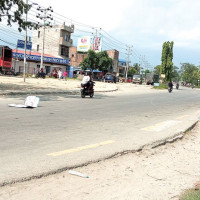
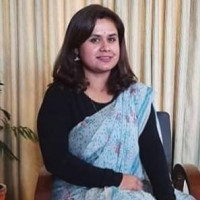
For the past 63 days, Deepa Nepali has been staging a sit-in on the dusty pavement at Maitighar in Kathmandu, demanding that the government guarantee housing security for Dalits, who have long been facing the problem of renting a decent house in the capital. Many Dalit activists and students have joined her protest in solidarity, having witnessed similar bitter experiences.
When she moved from Ghodaghodi Municipality in Kailai to Kathmandu eight years ago to pursue higher education, she believed she would escape the caste prejudice prevalent in her village. But she says it has taken a harsher form in the federal capital. Over the years, she was repeatedly subjected to discrimination and eviction from the rented rooms by the landlords after learning her surname. Within the last eight years, she was forced to change rented rooms eight times.
Fighting for dignity
Her search for shelter became a daily struggle for dignity, disrupting her studies and her focus on her future. Her struggle for housing security began from 2020 when a Home Ministry official evicted her from his house, citing that her presence had made their house impure and it needed to be purified. She took the matter to court, where the cases remain under consideration. She has recently lodged another complaint after her latest landlord allegedly assaulted her brother and drove the family out upon learning their family name.
“I thought educated people in cities would no longer follow such bad practices but discrimination in urban areas has existed in a more subtle way, as it is based on power, money, and social status.”
A few days ago, Home Minister Sudan Gurung visited Maitighar and met Nepali, promising to resolve the issues and exchanging phone numbers. However, Nepali says, the government has not taken any step to address the issues.
Nepali’s is not an isolated case. Across the country, Dalits continue to face humiliation, violence and exclusion. In May 2025, 22-year-old Priti BK of Malarani Rural Municipality-4 in Arghakanchi was allegedly beaten and abused by a local Brahmin while fetching water from a spring. He accused her of polluting the source.
Hundreds of kilometres away in Pokhara, Aman Pariyar, an MBA student at Prithivi Narayan Campus, allegedly faced caste-based abuse from a lecturer during an argument after an academic tour. Following complaints, the lecturer was removed from his departmental leadership role.
Another local of Pokhara, Shanta Bahadur Biswokarma, was invited to a neighbour’s wedding reception but was reportedly prevented from joining the buffet party. He was told that food would be served separately because upper-caste guests would refuse to eat if he touched the buffet. He left without eating and later filed a complaint.
Data speaks volumes
Rights activists state these incidents represent only a fraction of the discrimination experienced by Dalits.
Dalit students face humiliation, Dalit teachers experience prejudice from school administrations, inter-caste couples are attacked by non-Dalit families and many Dalit people report being denied equal access to housing, jobs, and public services. In a reported case, Dalit service seekers were made to wait outside the government office, which is operating from the rented building owned by so-called higher-caste families.
Police records reveal that caste-based violence remains a serious social issue. Between fiscal year 2015/16 and 2019/20, altogether 12 Dalits - 11 men and one woman - were killed in caste-related incidents. The Samata Foundation states that at least 17 Dalits have lost their lives since the Caste-Based Discrimination and Untouchability (Offence and Punishment) Act came into force in 2011.
Nepal Police recorded 24 cases of caste-based discrimination in the fiscal year 2024/25, 29 cases in 2023/24, 27 cases in 2022/23, 15 cases in 2021/22 and 39 cases in 202/21.
According to the Samata Foundation, 49 cases of caste-based discrimination against Dalits were documented in 2082 B.S. alone. These included discrimination in public places, workplaces, religious sites and cases linked to inter-caste marriages. Most incidents were reported from Madhes Province, followed by Karnali and Sudurpaschim.
Dalit activists argue the real numbers are much higher, as many victims remain silent because of fear, social pressure and lack of awareness. Even reported cases often fail to reach the courts, as police frequently encourage reconciliation instead of formal legal action against the perpetrators.
“I believe Dalit communities hesitate to openly speak up about their sufferings and experiences. Even now, many students who come to Kathmandu for higher education are forced to hide their caste identity. We are not treated as humans,” said Deepa Nepali.
Strong laws, weak implementation
Nepal has a constitutional, legal and institutional framework to address the issues and challenges faced by Dalits, who make up 13.44 per cent of the country’s population. Article 18 of the constitution guarantees equality before the law and prohibits discrimination on grounds such as caste, race, religion, sex or origin. Article 24 has criminalised untouchability. The Criminal Code 2017 further provides penalties for discrimination and abuse based on caste.
Nepal is also a signatory to international human rights treaties, including the International Convention on the Elimination of All Forms of Racial Discrimination. Yet, activists argue that legal guarantees have not translated into meaningful change.
Padam Sundas, a Dalit rights activist, said the Dalit movement has long demanded that the state formally acknowledge centuries of oppression and apologise to the community.
He said they initially welcomed the Rastriya Swatantra Party (RSP)’s inclusion of Dalit issues in its agendas, but said that such commitments should come directly from the state, not individual political parties.
Sundas said that although more than three billion rupees have been allocated for Dalit-related programmes in the upcoming budget, political parties, including new ones, have not clearly presented strong policies for Dalit upliftment. He further said that though the constitution is considered progressive on Dalit rights, weak implementation of laws prevented them from realising the fundamental rights. He called for a framing-related Act to this end.
Dalit activists have already prepared a draft law necessary for implementing constitutional rights and submitted it for consultation, he said, adding that the weak implementation of the existing laws has also slowed down the pace of social transformation. “Compared with the past, awareness has increased and Dalit communities are more united.”
Government initiatives
The RSP-led government has included social justice, inclusion and historical reconciliation in its 100-point reform plan. It has also announced a new initiative in the budget to promote one Dalit homestay in all 77 districts. However, Sundas said such initiatives must be accompanied by strong policies and effective measures to address deep-rooted caste-based discrimination.
According to Abha Shrestha Karna, Joint Secretary at the Ministry of Women, Children, Gender and Sexual Minorities and Social Security, pilot projects focusing on entrepreneurship and model villages have been launched in all seven provinces to promote social transformation.
The ministry is also conducting awareness campaigns and working to make judicial committees more responsive to systemic social issues.
Meanwhile, the National Dalit Commission Secretary Jhanak Kumar Khatri said that the government has allocated a limited budget to the Commission, which has been implementing various programmes targeting Dalit community. The Commission has also prepared a list of surnames that Dalits can adopt following a Supreme Court order recognising an individual’s right to change surnames if they expose them to discrimination or hurt their dignity, Khatri said. The list has already been submitted to the government.
Deepa Nepali, however, believes changing surnames will not end discrimination.
“In the age of science and technology, our identity should be based on knowledge and ability, not caste. However, even today, people are asked their surname before being offered a room, and polite language is used to mask discrimination,” she said, adding that the state has failed to create an inclusive urban environment. “Cities should not belong to only one caste or class. Everyone must have equal access to housing and services.”
Vedic philosophy does not profess caste discrimination
Acharya Yadunandan Bharadwaj, a Hindu guru, argues that ancient Vedic philosophy has not promoted the caste system. It considers the Varna system as a scientific division of labour based on an individual's qualities, abilities and duties rather than as an oppressive social hierarchy.
According to him, social distinctions emerged from practical requirements related to ritual purity and mental discipline with specific dietary and hygienic practice intended to support spiritual purity. “Unfortunately, these social distinctions gradually degenerated into the rigid caste system and the practice of untouchability,” he noted.