- Wednesday, 29 July 2026

PSC's focus is to uphold meritocracy and fairness


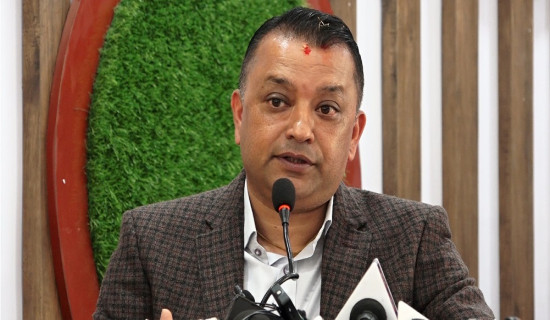
At a time when the attraction of young people towards government jobs has declined due to various reasons, the role of the Public Service Commission (PSC) remains crucial to attract young and bright professionals from different sectors. As Nepal’s oldest constitutional body marks 75 years of service, debates continue over recruitment efficiency, examination reforms, transparency, federal restructuring and opportunities for young aspirants. In this context, Arpana Adhikari of The Rising Nepal, together with a Gorkhapatra team, spoke with the Chairman of the PSC Madhav Prasad Regmi. In the interview, Chairman Regmi shared views on the Commission’s performance over the past seven decades, examination reforms, technological advancement, transparency, curricular revision, coordination under federalism and the future of merit-based public service in Nepal. Excerpts:
Over the last 75 years, the PSC has played an important role in grooming administrative leadership in Nepal. As the Chairman, how do you assess its performance?
The PSC is the oldest constitutional body of Nepal that was established on June 15, 1951, under the Interim Government Constitution. The Commission marked the beginning of its Diamond Jubilee celebrations last year and this year the Commission is concluding the year-long observance through various programmes.
Regarding administrative leadership, since 2008 BS the Commission has been publishing advertisements and conducting examinations for recruitment. In its early years, many prominent figures, including former Chief Justice Bishwonath Upadhyay and Dr. Gauri Shankar Lal Das, were among its candidates.
The Commission is mentioned in all seven constitutions of Nepal and has primarily been responsible for recruiting personnel in the civil service. Over time, its role has expanded to include organised institutions and security agencies, as provided by various constitutional provisions.
The Constitution of Nepal 2015 further strengthened the Commission by upholding its established principles of merit, fairness, transparency and competition, making it a trusted institution. Accordingly, its mandate now extends beyond civil service to include organised institutions and security agencies as well.
To date, the Commission has conducted examinations for 74 organisations, provided consultation for 108 institutions and has its representatives engaged in 107 bodies. In addition, as member of the University Service Commission, it also conducts xaminations for academic appointments, including professors and staff.
Overall, the Commission has played a significant role in producing administrative leadership in Nepal, with its recommended candidates serving across the civil service and wider public administration.
The double coding system introduced for confidentiality is widely praised. What is being done to make it even more secure and technology-friendly?
For institutional development, reforms are often necessary. However, for the Public Service Commission, the key challenge is more about preserving the legacy of our predecessors than about reform. While we have adapted to evolving technologies, our primary focus has been to uphold meritocracy, impartially, confidentiality, competence, fairness and transparency. The Commission has maintained its credibility and effectiveness by adhering to these principles.
As the Commission has introduced online applications and preliminary examinations considering the increasing number of candidates, how effective have these measures been?
This has proven highly effective, particularly the online application system. Previously, candidates had to fill out forms by hand and queue at banks to pay the fees. Now applications can be submitted from anywhere, with each candidate receiving a single ID and fees paid digitally through platforms such as Connect IPS and Khalti.
These technological improvements have enhanced efficiency and earned the Commission a Digital Governance Award in 2015. We have also developed reliable software for application processing, introduced backup systems, and strengthened data security through the Government Integrated Data Centre (GIDC). Following earlier data issues, we further improved our internal systems. Currently, we process around one million applications annually and the system runs smoothly and effectively.
As advertisements and results of the PSC often take years, it is widely seen as being particularly challenging for young people. What steps is the Commission taking to address these delays and weaknesses?
The weakness you have described does not exist in the way it has been presented. The Public Service Commission is certainly not in such a discouraging state. We publish an annual operational calendar each Shrawan, setting out in advance the schedule for advertisements, examinations and expected results, which we generally follow. However, rising workload and legal cases filed in courts sometimes lead to delays, as interim orders and judicial backlogs can affect timelines. Apart from these external factors, there are no significant internal delays in the Commission’s processes.
There are concerns that the Commission’s exams focus more on rote learning than skills. How can curriculum revision and expert selection be improved to make them more relevant to current needs?
We are addressing the concerns you have raised. Curriculum revision is a continuous process and must evolve with time, just as academic courses adapt to technologies and global changes. In fact, we declared last year as the ‘Curriculum Revision Year’ and carried out significant reforms.
However, it is important to understand that the responsibility for defining and updating curricula primarily lies with the ministries responsible for respective service groups. They determine required competencies and submit proposals, which are then reviewed by the Commission’s expert committee before being finalised and implemented.
We have consistently urged the relevant ministries to act promptly, and reforms are ongoing. However, the progress has not been as fast as desired due to constraints in resources and coordination.
Regarding recruitment issues, it was disrupted for various reasons. In some years, vacancies were not forwarded for recruitment at all; vacancies were concealed, while temporary, contractual, and wage-based appointments were made instead. As a result, competitive young people in the market have not had adequate opportunities. Therefore, we urge all concerned institutions to promptly send vacancy demands so that timely and fair recruitment can be ensured.
What challenges has the Commission faced in relation to the Federal Civil Service Act, and how is it coordinating with the provincial PSCs?
The Federal Civil Service Act should have been in place soon after the Constitution was promulgated. But it has been delayed for over a decade. This has created challenges due to inconsistencies in the legal hierarchy between federal, provincial and local laws. And in some cases provinces have passed laws that conflict with federal provisions. This has raised concerns about service benefits and post-retirement entitlements.
Another major issue is employee adjustment after federal restructuring, where career progression and service continuity for staff deployed to provincial and local levels remain unclear.
Similarly, there are uncertainties concerning promotions. After receiving a one-level promotion, there is confusion over whether employees remain eligible to compete for federal-level promotions. While the Public Service Commission has taken one position, at times the Administrative Court has issued a different interpretation, and the Supreme Court has occasionally delivered another ruling. As such, disputes have continued to emerge.
Therefore, early enactment of the Federal Civil Service Act is essential to resolve these legal and administrative uncertainties. Doing so would be in the best interests of employees, and indeed, it is the need of the hour.
The proposed Civil Service Bill has been widely discussed in the media, including retirement age options such as 60 years or 55 years with 30 years of service. What is the Commission’s view on this?
A Bill has now been floated for feedback. However, as it has been presented specifically for suggestions and consultations, the government will certainly revise it based on the feedback received. This process will proceed through the Ministry of Law, Justice and Parliamentary Affairs and the Government of Nepal before being forwarded to the Public Service Commission for consultation. Only at that stage will it become clear in what form it arrives, what provisions it includes and under which legal framework it has been drafted. Without first reviewing those provisions, it would not be appropriate for the PSC to comment or make recommendations at this stage. Therefore, I believe it would be prudent to wait for some time.
The Constitution requires government to seek the Commission’s consultation on employee promotions and departmental actions. How seriously are these recommendations implemented in practice?
The Commission’s recommendation on promotion and disciplinary matters have been fully implemented in practice. Under Article 243 of the Constitution, consultation is required in several areas of civil service management. But some consultation processes have not proceeded as expected.
Regarding the Federal Civil Service Bill, our recommendations were provided but the Bill was not enacted in that form. Therefore, there is no basis to assess whether our recommendations were implemented or not in that context.
However, during my tenure since June 24, 2021, I have not observed any instance of non-implementation. Overall, our recommendations have been consistently followed.
There are concerns about political interference in many state institutions. How does the Commission remain free from external pressure and what assurance do you give the public?
It is sometimes assumed that political interference exists in institutions, including the Public Service Commission. However, I have not personally faced any such pressure while carrying out my responsibilities. We must also understand that we operate within the same society and not every inquiry or interaction should be seen negatively. Being in the Commission does not mean isolating oneself from communication or engagement.
Our duty is to work strictly according to the Constitution, law and principles of integrity. This is how the Commission functions. In that sense, we have not experienced any interference or obstruction in our work.
How has people’s interest in PSC examinations changed in recent years compared to the past?
In recent years, around 900,000 to 1,000,000 candidates have been applying annually for PSC examinations, while total vacancies remain around 30,000 and 32,000. Although this reflects strong competition, it is not entirely a positive situation, as a large number of capable youths remain without opportunities. Therefore, the focus should be on improving the quality of selection rather than only increasing numbers.
To address this, the Commission has introduced a preliminary screening system for posts such as Section Officer, Nayab Subba and Kharidar, including in organised institutions. This helps filter qualified candidates for the main examination.
We have also improved the process by conducting exams through multiple centres across the country, reducing travel costs and inconvenience for candidates. The pass mark has been raised from 40 to 45 to ensure only qualified candidates proceed further. Overall, the aim is to provide relief to candidates and improve efficiency in the recruitment process. Otherwise, repeated advertisements and repeated attempts concentrated in urban areas without success is neither efficient nor fair for the candidates.
What message would you like to give young people preparing for PSC examinations?
Preparing for PSC examinations should not be viewed as the sole path in life or require excessive pressure. Candidates should stay updated and prepare consistently and in a balanced manner.
Today, there are far more resources, coaching centres and study materials available than in the past. The PSC remains a trusted institution built on merit, transparency and fairness. It also offers valuable opportunities to serve the nation.
I encourage all aspiring candidates to participate in the competitive process with confidence. The PSC is committed to addressing public questions and concerns.
Finally, I warmly encourage young people and their guardians to embrace this opportunity and take part in a merit-based process to serve the nation.
What is the formula for transparency in the PSC?
The Commission’s transparency is based on a clear operational calendar and strict confidentiality in all processes. Its organisational culture ensures that staff work only within assigned branches. A double-coding system is used so that the identity of evaluators or those handling a particular task is not known. It is not visible who is doing which part of the work. Only at the final stage of result publication does the Chairman and the Secretary have access to the overall outcome and aggregate results.
At the level of individual offices, only limited information is available, while other details remain strictly confidential. This system of confidentiality, combined with procedural clarity and controlled access to information, ensures transparency as well as integrity in the Commission’s work.