- Wednesday, 29 July 2026

Industrial credit nears Rs. 1.8T; Bagmati leads with 72%
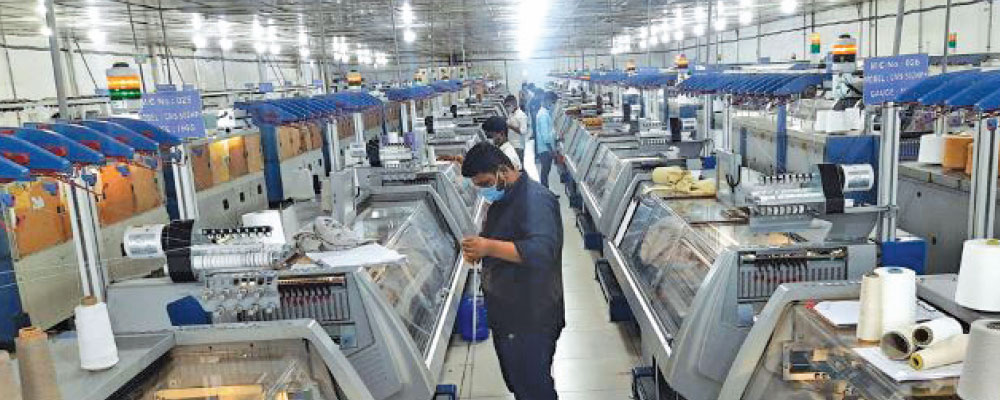

Kathmandu, June 15: Credit flow to industrial sector has reached nearly Rs. 1.8 trillion by the first half of the current fiscal year, according to the semi-annual economic activity study (Integrated) published by the Nepal Rastra Bank (NRB).
The report shows that banks and financial institutions (BFIs) invested Rs. 1,778.30 billion in small, medium, and large industries by mid-January 2026, marking a 7.99 per cent increase compared to the same period last fiscal year.
In contrast, industrial lending had expanded by 17.66 per cent in the corresponding period a year earlier, indicating a slowdown in growth momentum. The industrial sector accounted for 30.82 per cent of the total credit flow of banks and financial institutions.
Among industrial loans, the highest share of credit was directed towards non-food manufacturing industries at 35.67 per cent, followed by electricity, gas and water-related industries with 26.62 per cent.
Similarly, agriculture, forestry and beverage-related industries received 20.64 per cent; construction-related industries 12.26 per cent; metal products, machinery and electronics industries 4.14 per cent; and mining-related industries 0.67 per cent of total industrial credit.
Province-wise, Bagmati Province received the largest share of industrial credit investment, amounting to Rs. 1,284.30 billion and accounting for 72.22 per cent of total industrial lending. In contrast, Karnali Province recorded the lowest investment, with industrial loans worth Rs. 4.41 billion, representing only 0.25 per cent.
The share of industrial credit stood at 9.22 per cent (Rs. 164.04 billion) in Koshi Province; 7.22 per cent (Rs. 128.47 billion) in Madhes Province; 1.62 per cent (Rs. 28.72 billion) in Gandaki Province; 7.91 per cent (Rs. 140.70 billion) in Lumbini Province; and 1.55 per cent (Rs. 27.63 billion) in Sudurpaschim Province.
461 new industries registered
The report also shows that 461 new industries were registered across the country during the review period, including small, medium, and large-scale enterprises. The report shows that Bagmati Province recorded the highest number of newly registered industries at 363, while Sudurpaschim Province registered the lowest, with only four new industries.
Similarly, a total of 21 industries were registered in Koshi Province; 25 industries in Madhes Province; 19 industries in Gandaki Province; 24 industries in Lumbini Province; and five in Karnali Province by mid—January 2026 of the current fiscal year.
According to the report, proposed foreign investment in newly registered industries amounted to Rs. 55.83 billion. These industries are expected to generate employment opportunities for 22,885 people.
Capacity utilisation declines
Meanwhile, the report shows that an average capacity utilisation of 195 surveyed industries stood at 42.11 per cent during the review period, slightly lower than 42.94 per cent recorded during the same period last fiscal year.
Among the surveyed industries, garment industries reported the highest capacity utilisation at 95.74 per cent, followed by textile industries at 90 per cent. Likewise, hydropower industries recorded 82.74 per cent capacity utilisation, tyre and tube manufacturing industries 76.20 per cent, and noodle industries 70.06 per cent.
Among the industries covered by the study, capacity utilisation has increased in industries producing garments, sugar, steel products, soybean oil, aluminium products, beer, processed leather, ointments, tyres and tubes, other chemical products (liquids and capsules), sawn timber, soft drinks, alcoholic beverages, biscuits, yarn, cement, and others.
However, capacity utilisation has declined in industries producing G.I. pipes, raw leather, vegetable ghee, cigarettes, bricks, G.I. wire, iron rods, sheets and related products, slippers, wheat flour, processed tea, processed milk, paper, electric wires and cables, household metal goods and others.